
Automatic Barriers
Get in TouchAt Gate Services, we specialise in providing automatic barriers that enhance security and convenience across and the surrounding area. Our automatic barriers offer advanced vehicular access control, suitable for commercial, industrial, and residential properties.
With robust materials and cutting-edge technology, our solutions effectively manage entrance points, reducing unauthorized access. Reach out to us today to discuss your automatic barrier needs.
What Is Automatic Barriers?
Automatic barriers are security installations designed to control vehicular access to a site. At Gate Services, we build systems that integrate seamlessly into different environments, from car parks to gated communities.
Our barriers operate through various mechanised systems, hydraulic, electromechanical, and pneumatic, tailored to specific site requirements.
We incorporate advanced features such as automatic vehicle identification (AVI) and loop detectors, which enhance security by ensuring only authorised vehicles gain access. Our systems comply with British Standards for safety and reliability, providing consistent performance.
Automatic barriers can be integrated with CCTV systems for comprehensive monitoring and with remote control options for busy sites requiring flexible access.
Routine maintenance schedules help ensure the longevity of our installations, with typical service intervals ranging from six months to a year. Our solutions are ideal for commercial establishments, industrial sites, and residential communities requiring stringent access control.
Get in touch with us to find out how our automatic barriers can enhance your property's security and efficiency.
What Types of Automatic Barriers Are Available?
We offer a range of automatic barriers designed to meet diverse requirements. Each type is engineered for specific conditions to ensure optimal performance, and we provide options compliant with British Safety Standards.
Rising Arm Barriers: These barriers control vehicle access by using a boom arm that lifts vertically. They're often used in car parks and industrial sites for traffic management, and can be equipped with LED lights for enhanced visibility during night-time operation.
Swing Gates: Ideal for wide entrances, such as those found in commercial or residential estates, these gates open by swinging to the side. They can be fitted with electro-hydraulic operators to ensure smooth and reliable motion.
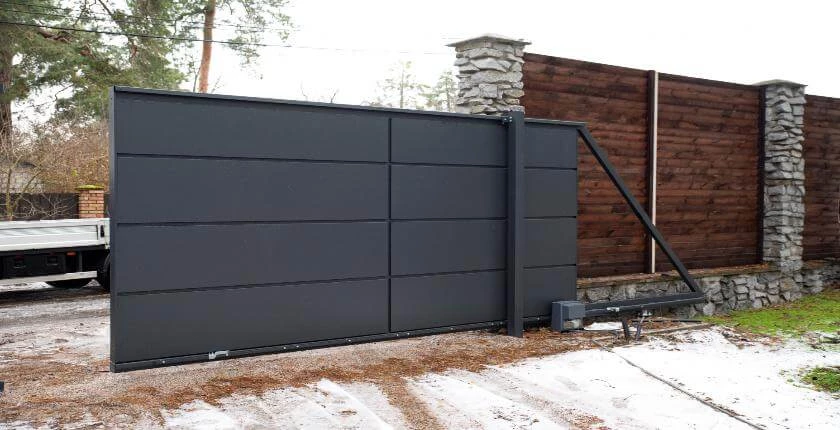
Sliding Gates: Suitable for sites with limited space, such as tight urban settings and narrow driveways, these gates slide horizontally to open. We offer options with rack and pinion drive systems, known for their durability and efficiency.
Bi-Folding Gates: Comprising two sections, these gates fold back to allow quick access, making them perfect for locations with high traffic flow or emergency exits. Available with aluminium or steel construction, they provide both strength and speed.
Our team can assist in selecting the most suitable barrier for your specific needs.
What Are Automatic Barriers Suitable For?
Automatic barriers are ideal for a range of applications, serving multiple purposes in both public and private settings. They integrate features such as vehicle detection loops and programmable logic controllers, improving operational efficiency and security.
Car Parks: Manage high volumes of traffic and ensure security by automatically recognising permit holders using number plate recognition systems or RFID. Barriers can be set to allow free exit during busy hours to reduce build-up.
Commercial Sites: Enhance security by controlling vehicular entry with access codes or card readers. They comply with safety standards like EN 12453, which governs automatic gate safety requirements.
Industrial Estates: Gate large entrances to safeguard assets, featuring robust construction using galvanised steel for endurance in heavy-duty environments. They also help optimise logistics by streamlining vehicle flow.
Residential Areas: Regulate access to private communities and properties, often integrated with intercom systems for visitor communication. These barriers support the safety requirements outlined in the EN 13849-1 standard for safety-related control system parts.
We are here to discuss the best options for your specific needs and requirements.
When Is Automatic Barriers Needed?
Automatic barriers are necessary in numerous scenarios. At Gate Services, we recommend them for high-traffic areas needing strict access control, such as industrial estates and commercial properties.
They can regulate vehicle flow effectively using a combination of safety photocells and loop detectors to ensure smooth operation and prevent accidents.
For car parks, automatic barriers can be integrated with ticketing systems and ANPR (Automatic Number Plate Recognition) to automate entry and exit processes. They are also beneficial for residential complexes looking to enhance perimeter security.
Our barriers comply with industry standards like EN 12453, ensuring they meet safety requirements.
These barriers can be programmed for various operational modes, including single or bi-directional access, and are constructed from durable materials like stainless steel or aluminium, suited for different environmental conditions.
Contact us to learn more about installing automatic barriers.
How Does Automatic Barriers Work?
Our automatic barrier installation process ensures seamless functionality by adhering to a structured approach that optimises each stage for maximum efficiency.
Site Assessment: We conduct a thorough evaluation of the location, considering factors such as traffic flow, vehicle types, and pedestrian movement to determine the most effective barrier solution.
Design and Planning: Our experts develop a custom solution tailored to the specific needs of the site, using CAD software to visualise the installation and ensure it meets both aesthetic and functional goals.
Installation: Professionally trained technicians install barriers, using hydraulic or electric arm mechanisms, and ensure that all functions meet safety standards like BS EN 1398.
Integration: We connect the barriers with existing security or access systems, such as ANPR cameras or RFID readers, to enhance site security.
Maintenance: Schedule regular check-ups, including testing of all mechanical and electrical components, to maintain optimal performance and compliance with ongoing safety assessments.
This comprehensive process ensures that our clients experience efficient access control and long-term reliability. For further information or to arrange a consultation, please contact us.
How Long Does Automatic Barriers Take?
The installation of automatic barriers at most locations typically takes two to three days. This timeframe encompasses setup, wiring, and comprehensive testing to ensure full functionality.
We employ advanced control units and safety loop detectors to comply with safety standards, which provides reliable operation.
Should any integrations with existing systems, such as CCTV or building access controls, be required, it might extend the timeframe slightly. Occasionally, soil conditions may necessitate additional groundwork, especially in areas with unstable surfaces.
If your project involves specialised equipment like boom arms with LED lighting, additional time may also be needed.
We always conduct a thorough risk assessment prior to commencing any project, which can help determine the exact timescale. To understand more about your specific installation needs, we invite you to get in touch with our experts.
Who Needs Automatic Barriers?
Various sectors require automatic barriers. At Gate Services, we cater to businesses, industrial areas, and residential communities.
Automatic barriers are indispensable for sites prioritising security and access control. Our systems provide safety by effectively managing entry points.
We employ detection systems like loop detectors and photocells to ensure safe operation, automatically stopping the barrier if an obstruction is detected. Companies often integrate these barriers with access control technology such as RFID readers and keypads, offering tailored security solutions.
Industrial sites benefit from barriers capable of managing heavy traffic flow with features like rapid operation and durability in various weather conditions.
In residential communities, automatic barriers help to prevent unauthorised access, contributing to the safety of residents and their properties. Contact us to learn how our solutions can meet your specific needs.
How Much Does Automatic Barriers Cost?
Automatic barriers typically cost between £3,000 and £7,000 per unit. The cost is influenced by the type of barrier, installation complexity, and site-specific requirements.
For instance, the choice between rising arm barriers, sliding gates, and swing gates can significantly affect pricing.
Installation involves factors such as trenching for electrical cabling, adherence to safety standards including BS EN 12453 for power-operated doors and gates, and potentially integrating with your site's existing access control systems. The use of durable materials like galvanised steel can also impact the cost due to their longevity and resistance to corrosion.
Our team at Gate Services can offer detailed, no-obligation quotations tailored to your specific application. We work with commercial properties, public sector facilities, and residential complexes.
Contact us to explore options that fit your budget and needs.
What Are the Benefits of Automatic Barriers?
Automatic barriers offer several advantages for sites and beyond, enhancing both security and operational efficiency.
Enhanced Security: Deter unauthorised access with robust access control systems. Integration with ANPR (Automatic Number Plate Recognition) technology allows for seamless identification and logging of vehicles, which is crucial for high-risk areas such as industrial estates and gated communities.
Traffic Management: Improve the flow and management of vehicles by regulating entry and exit during peak hours. Barrier arms can be programmed to work in tandem with traffic lights to ensure optimal movement, reducing congestion and facilitating emergency vehicle access.
Cost-Effective: Reduce the need for manual security personnel and streamline operations. The lower maintenance costs of systems compliant with ISO 9001 standards contribute to long-term financial savings.
Customisable: Adapt solutions to fit specific site requirements with a range of materials like galvanised steel and powder-coated finishes, alongside varying barrier arm lengths to accommodate different entrance sizes.
These features make automatic barriers an attractive option for commercial properties, residential complexes, and public facilities.
What Regulations Apply to Automatic Barriers?
Automatic barriers in the UK comply with several regulations to ensure safety and efficiency. Key standards include BS EN 13241-1, which governs construction and performance, and the Supply of Machinery (Safety) Regulations 2008, which mandates safety compliance.
Additionally, the Electromagnetic Compatibility Regulations ensure that the barriers operate effectively without causing interference to other electronic devices.
For those barriers used in public spaces or commercial properties, the Accessibility Regulations, focusing on ease of use for all individuals, are also crucial. Our installations often incorporate advanced safety features like infrared sensors and pressure-sensitive edges to prevent accidents.
We conduct thorough risk assessments and install manual release mechanisms in compliance with the Machinery Directive 2006/42/EC, enhancing safety for users.
All installations by Gate Services adhere to these regulations, ensuring that every system we implement is safe, compliant, and reliable. Contact us to learn more about our services in automatic barrier systems.
Why Choose Gate Services for Automatic Barriers?
Gate Services offers expertise in automatic barrier installations. We use programmable logic controllers (PLCs) to manage barrier movement, ensuring smooth and efficient operation.
Our process incorporates innovative sensor technologies such as inductive loops, which detect vehicles and operate the barrier automatically. We employ durable materials including galvanised steel and powder-coated aluminium to withstand various weather conditions.
We ensure each project meets British and European regulatory standards like BS/EN 12453 for safety. Our services are suitable for a range of properties including commercial complexes, residential estates, and public parking facilities.
Our team conducts a thorough site evaluation to tailor each installation to our client's specific needs, ensuring both security and convenience.
Choose us for competitive pricing and comprehensive service from concept to completion. Contact us today to discuss your requirements.
Automatic Barriers: Frequently Asked Questions
How much do automatic barriers cost?
Automatic barriers generally range from £3,000 to £7,000. Exact prices depend on the specifics of the project and requirements.
How long do automatic barriers last?
When maintained properly, automatic barriers can last over 10 to 15 years. Regular servicing is crucial for longevity.
Are automatic barriers weather-resistant?
Yes, our automatic barriers are designed to withstand various weather conditions, ensuring reliability year-round.
Can automatic barriers be integrated with existing systems?
Indeed, our team can integrate automatic barriers with existing security systems, providing a cohesive access control solution.
Do automatic barriers require regular maintenance?
Yes, routine maintenance is essential to ensure the optimal performance of automatic barriers.
Get a Free Quote for Automatic Barriers
Contact us today to receive a competitive, no-obligation quote for your automatic barrier needs. Our team of experts is ready to assist you.
Related Automatic Barriers Services
Automatic barriers regulate vehicle movement at entrances such as car parks, commercial premises and controlled access points. Where a full physical gate is required, commercial gates provide a related access solution.
Electronic vehicle access can be managed through access control systems, while intercom systems can support communication with visitors and drivers.
Where vehicle restriction requires a more substantial physical barrier, rising bollards provide an alternative controlled-access solution.